
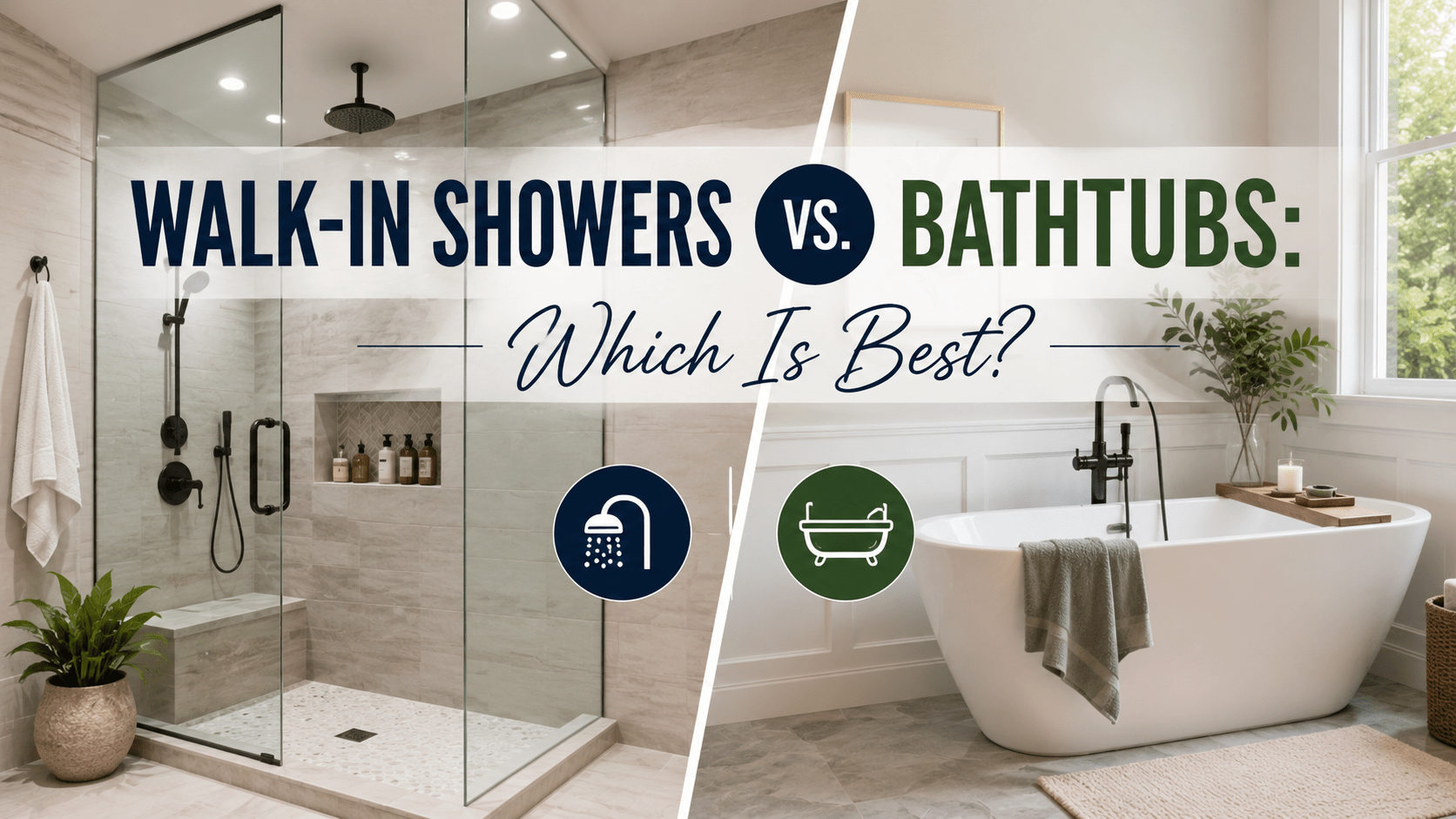
When planning a bathroom remodel, one of the biggest decisions homeowners face is whether to install a walk-in shower or keep—or add—a bathtub. Both options offer unique advantages, and the best choice depends on your lifestyle, family needs, available space, and long-term goals.
Modern bathroom designs have evolved dramatically over the past decade. Walk-in showers have become increasingly popular for their sleek appearance and accessibility, while bathtubs continue to provide comfort, relaxation, and family-friendly functionality.
At Payne Construction Group, we help homeowners design bathrooms that are both beautiful and practical. If you’re trying to decide between a walk-in shower and a bathtub, this guide will help you weigh the pros and cons of each option.
Why This Decision Matters
Your bathroom is one of the most frequently used spaces in your home. Choosing the right fixture affects not only your daily routine but also your home’s value, functionality, and future usability.
Before making a decision, consider factors such as:
- Your household’s needs
- Your budget
- Available bathroom space
- Maintenance preferences
- Accessibility requirements
- Long-term resale value
There isn’t a one-size-fits-all answer, but understanding each option makes the decision much easier.
The Benefits of Walk-In Showers
Walk-in showers have become one of the most requested features in modern bathroom remodels. Their clean lines and open layouts create a spacious, luxurious feel that works well in bathrooms of nearly every size.
Modern Appearance
One of the biggest reasons homeowners choose walk-in showers is their contemporary design.
Features often include:
- Frameless glass enclosures
- Large-format tile
- Linear drains
- Minimalist fixtures
- Built-in niches
- Floating benches
These design elements create an elegant, spa-inspired atmosphere.
Easier Accessibility
Walk-in showers are often the preferred option for homeowners planning to age in place.
Low-threshold or curbless designs reduce trip hazards and make entering the shower much easier.
Additional accessibility features can include:
- Grab bars
- Built-in seating
- Handheld showerheads
- Slip-resistant flooring
These upgrades improve both safety and comfort.
Makes Small Bathrooms Feel Larger
Because glass enclosures allow uninterrupted sightlines, walk-in showers often make bathrooms appear more open.
Even smaller bathrooms can feel significantly larger with a properly designed walk-in shower.
Easy Cleaning
Without shower curtains or large tub surrounds, walk-in showers are often easier to clean.
Fewer corners and modern glass treatments help reduce soap scum and mildew buildup.
Potential Drawbacks of Walk-In Showers
While walk-in showers offer many advantages, they may not be ideal for every household.
Less Suitable for Young Children
Families with infants and toddlers often find bathtubs much more convenient for bathing children.
Although children can certainly use showers, tubs generally provide greater flexibility during the early years.
No Soaking Option
Many homeowners enjoy relaxing in a warm bath after a long day.
Replacing the only bathtub in a home means losing this option entirely.
If relaxation is important, consider incorporating features like rainfall showerheads, body sprays, or built-in benches to create a spa-like shower experience.
The Benefits of Bathtubs
Bathtubs remain a popular feature in many homes and continue to offer practical and lifestyle benefits.
Ideal for Families
For households with young children, a bathtub is often the most practical choice.
Bath time is easier, safer, and more convenient for parents when a bathtub is available.
Many families intentionally keep at least one tub in the home for this reason.
Excellent for Relaxation
Many homeowners simply enjoy soaking in a bathtub to unwind.
Modern options include:
- Freestanding tubs
- Deep soaking tubs
- Whirlpool tubs
- Air jet tubs
These options create a luxurious retreat within your own home.
Traditional Appeal
Bathtubs remain an expected feature in many homes.
Having at least one bathtub can appeal to a wider range of future buyers, particularly families with children.
Potential Drawbacks of Bathtubs
While tubs offer several benefits, they also have limitations.
Takes Up More Space
Bathtubs generally require more floor space than walk-in showers.
In smaller bathrooms, replacing a tub with a shower can dramatically improve layout and usability.
Higher Water Usage
Taking a bath typically uses more water than an average shower.
Homeowners focused on water conservation often appreciate the efficiency of modern shower systems.
More Difficult to Enter
Stepping over the side of a bathtub can become more challenging with age or mobility limitations.
This is one reason many homeowners eventually transition to walk-in showers.
Which Option Adds More Home Value?
One of the most common questions homeowners ask is which feature provides the greatest return on investment.
The answer depends largely on the home itself.
Homes with Multiple Bathrooms
If your home has more than one full bathroom, converting one tub into a walk-in shower is often a smart investment.
Many buyers appreciate having:
- A luxury primary bathroom with a walk-in shower
- A secondary bathroom with a bathtub
This combination appeals to a wide range of lifestyles.
Homes with Only One Bathroom
If your home only has one full bathroom, removing the only bathtub may reduce appeal for some buyers.
In these situations, many remodeling professionals recommend retaining at least one tub if possible.
Comparing Daily Convenience
When considering your daily routine, think about how your bathroom is actually used.
Walk-In Showers Work Well For:
- Busy professionals
- Older adults
- Couples
- Homeowners seeking easier maintenance
- Accessibility needs
- Modern bathroom designs
Bathtubs Are Often Better For:
- Families with young children
- Homeowners who enjoy soaking baths
- Traditional home layouts
- Homes with only one full bathroom
Choosing based on your lifestyle usually leads to the highest long-term satisfaction.
Bathroom Size Matters
Available space plays an important role in determining the best option.
Smaller Bathrooms
Walk-in showers can make compact bathrooms feel larger and more functional.
Removing bulky tub surrounds often creates:
- Better traffic flow
- More visual openness
- Additional storage opportunities
- Improved accessibility
Larger Bathrooms
If space allows, homeowners don’t necessarily have to choose one or the other.
Luxury primary bathrooms often feature:
- Large walk-in showers
- Freestanding soaking tubs
- Double vanities
- Separate water closets
This combination offers the greatest flexibility and resale appeal.
Custom Features for Walk-In Showers
Today’s walk-in showers offer countless customization options.
Popular upgrades include:
- Frameless glass
- Rainfall showerheads
- Multiple body sprays
- Built-in benches
- Heated floors
- Decorative tile accents
- Recessed shampoo niches
- LED lighting
These features transform an ordinary bathroom into a luxurious retreat.
Custom Features for Bathtubs
Modern bathtubs have also evolved considerably.
Homeowners can choose from:
- Freestanding tubs
- Oval soaking tubs
- Whirlpool systems
- Air massage tubs
- Heated backrests
- Elegant faucet designs
These options add comfort and visual appeal to any bathroom remodel.
Accessibility and Aging in Place
Many homeowners remodel with the future in mind.
Walk-in showers offer significant advantages for aging in place because they can easily accommodate future mobility needs.
Features such as:
- Curbless entries
- Wide door openings
- Grab bars
- Slip-resistant tile
- Built-in seating
can help homeowners remain independent longer.
Planning ahead during a remodel often eliminates the need for costly modifications later.
Maintenance Considerations
Cleaning requirements differ slightly between the two options.
Walk-In Shower Maintenance
Walk-in showers typically require:
- Glass cleaning
- Tile maintenance
- Grout sealing
- Drain cleaning
Modern materials can significantly reduce maintenance demands.
Bathtub Maintenance
Bathtubs generally require:
- Surface cleaning
- Caulk inspection
- Drain maintenance
- Faucet upkeep
Both options can remain beautiful for many years with proper care.
So…Which One Is Best?
Ultimately, neither option is universally better.
The right choice depends on how you use your bathroom today—and how you expect to use it in the future.
Choose a walk-in shower if you prioritize:
- Modern design
- Accessibility
- Easy maintenance
- Spacious appearance
- Quick daily routines
Choose a bathtub if you value:
- Family-friendly functionality
- Relaxation
- Soaking baths
- Traditional appeal
- Greater flexibility for children
Many homeowners ultimately choose both when space allows, creating a luxurious and highly functional bathroom.
Let Payne Construction Group Help Design Your Perfect Bathroom
Every home is different, and every family has unique needs. Whether you’re dreaming of a sleek walk-in shower, a luxurious soaking tub, or a complete bathroom transformation, working with an experienced remodeling contractor ensures your project is designed for both beauty and functionality.
At Payne Construction Group, we help homeowners create custom bathrooms that fit their lifestyle, improve comfort, and add long-term value to their homes. From layout planning and fixture selection to expert craftsmanship and finishing details, our team is committed to delivering exceptional results you’ll enjoy for years to come.
If you’re ready to begin your bathroom remodeling project, contact Payne Construction Group today to schedule a consultation and explore the best options for your home.